Home
Home  Navigation


Though it's been just 23 years since Danny Boyle's groundbreaking post-apocalyptic thriller 28 Days Later first stunned audiences, the anticipation for its upcoming sequel 28 Years Later feels unbearable. Who would complain if Boyle and writer Alex Garland trimmed a few years from the title to deliver this long-awaited continuation?
While 28 Years Later maintains the distinctive—and often brutal—visual style that terrified zombie fans and mainstream viewers with its sprinting "infected" and gritty digital aesthetic, the new installment embraces a grander scale that transcends its predecessor's modest origins. After screening the first 30 minutes, we spoke with Boyle about his return to the nightmarish world of the Rage Virus.
"We opted for an expansive widescreen format this time," Boyle tells IGN. "We wanted to amplify the unease created by the original's relentless speed and visceral intensity. In widescreen, threats could emerge from anywhere—forcing audiences to constantly scan their surroundings."
Starring Aaron Taylor-Johnson, Jodie Comer, and Alfie Williams, 28 Years Later balances epic scale with intimate character moments that defined the original—while inventing terrifying new ways to depict the infected.
From 28 Days to 28 Years: A Journey Through Brexit-Era Britain
Since 28 Days Later's release, Boyle and Garland periodically revisited sequel ideas (including 2007's 28 Weeks Later, which they executive produced). A British Film Institute revival screening years later surprised Boyle with the original's enduring appeal.
"That reaction made us think," he recalls. "Alex and I kept meeting to explore how to expand this world."
While initial concepts fizzled out—including one script where governments weaponized the virus—their breakthrough came from flipping expectations. Instead of global spread, they focused inward, inspired by Britain's post-Brexit isolation.
"The first film felt distinctly British," Boyle explains. "Real-world events gave us material to explore. Brexit became our lens—an opportunity to examine self-imposed isolation."
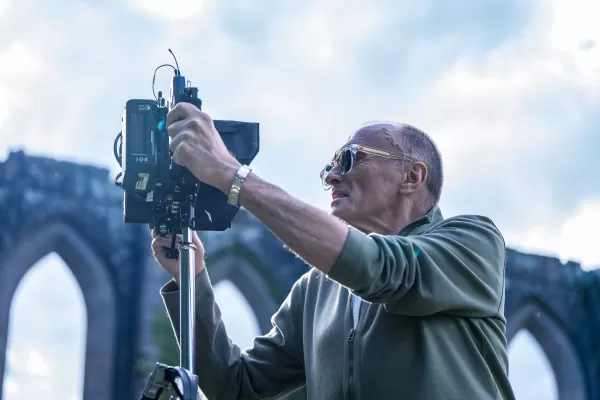
The film opens on an isolated island community—safe from mainland infection but completely alone. "These films reflect our reality," says Boyle. "Not as lectures, but as mirrors to our times."
Innovation Through Limitation: iPhones and Ultra-Widescreen Terror
28 Days Later's raw digital aesthetic defined its success. For the sequel, Boyle and cinematographer Anthony Dod Mantle embraced similar creative constraints—now using iPhones alongside cutting-edge techniques.
"Technical limitations spark innovation," Boyle notes. The crew deployed up to 20 iPhones simultaneously through specialized rigs, creating what the director calls "poor man's bullet time."
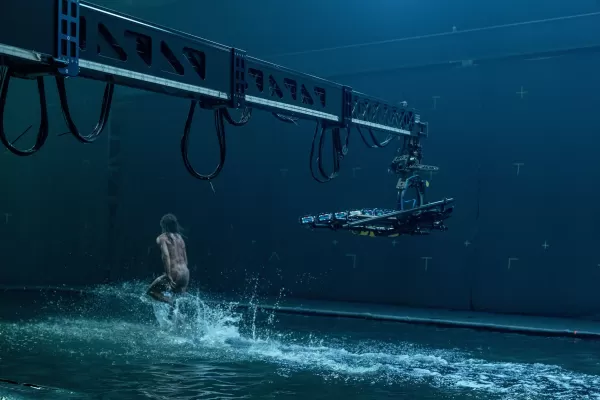
Their most daring choice? Shooting in 2.76:1 aspect ratio—typically reserved for IMAX epics—to immerse viewers in the ravaged UK. "We built rigs for 8, 10, even 20 cameras," Boyle reveals. "There's a jaw-dropping sequence using the 20-camera array that redefines action cinematography."
This approach also unsettled actors: "Veterans expect certain camera placements. This method keeps them—and the audience—constantly off-balance."
"Like crossing the line in editing, it throws viewers into the scene," Boyle adds. "You're not watching Jodie Comer's confrontation with Aaron Taylor-Johnson—you're in that room. You're present for every horrifying moment."
Balancing Spectacle With Human Drama
The Boyle-Garland partnership (beginning with 2000's The Beach) thrives on challenging conventions. "Alex writes cinematic physics that push directors," Boyle says of Garland's approach to action scenes.
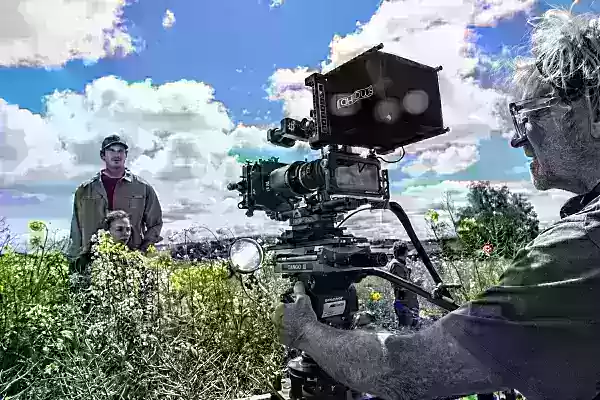
"He innovates with spectacle but roots it in character," Boyle continues. "My role is translating those ideas through actors' performances and cinematic dynamics." Their creative tension yields something unprecedented.
"The film will surprise people," Boyle promises. "It delivers expected thrills while subverting them completely. That duality makes me proud."
 Latest Articles









 Latest Games